Safe Sex

Summarise the article with AI:

Sexual Health >> Safe Sex

Safe Sex 101: Tips and tricks to feeling good, staying healthy and getting pleasure

Whether you are new to exploring your sexuality, casually dating or in a committed relationship, safe sex is key!

Here are some tips to enjoy yourself, while staying healthy and safe:

Female

No glove, no love: Use condoms and dental dams the right way

Condoms and dental dams are your first defence against STIs and unplanned pregnancies. But here's the deal – they only work if you use them correctly.

For condoms:

Check the expiry date before the fun begins.
Pinch the tip to leave space for semen (no air bubbles!).
Roll it all the way down, no halfway jobs!
Use a new one every single time, even for round two or switching between vaginal and anal sex.
Do not use two condoms (double condoms) at the same time, which increases risk of condom breaking.
Store them in a cool, dry place (wallets and hot cars are a no-go).

For dental dams (used for oral action):

Check the expiry date too – yes, they have one!
Place it flat over the vulva or anus (don't stretch it too tight).
Hold it in place with your hands or a bit of water-based lube underneath to stop it slipping.
Use a fresh one every single time, and don't flip it over between partners or body parts.
Store in a cool, dry place – same rules as condoms.

Allergies? No worries – non-latex options like polyurethane or polyisoprene condoms and dental dams have your back.

Lube is your BFF / a game changer

Lubricants (or lubes) aren't just for “when it's dry”. They make sex smoother, slippier and way more fun – plus they help prevent micro-tears in your vagina (ouch!) and lowers your risk of getting STIs!

Here are your lube options:

Water-based lubricant: Safe with all condoms. Feels natural but may dry out faster.
Silicone-based lubricant: Super long-lasting and safe with latex and non-latex condoms. Just don't use it with silicone toys—it can damage them.
Oil-based lubricant: Never use with latex condoms (oil can make them break).

Heads up! Some lubes have ingredients that can irritate sensitive skin. If you feel a tingle that doesn't feel sexy (itching, burning, redness), rinse it off and switch to another lube. Your bits deserve VIP treatment!

Skip the moisturiser in the bedroom. It might hydrate your skin, but stick to lubes to keep things safe and irritation-free!

Get regular STI Checks

STIs can be passed during oral, vaginal, or anal sex via blood, semen, vaginal fluids and saliva – even if you or your partner don't show any symptoms.

When should you get tested?

After a new partner.
If you've had unprotected sex.
Or every 6–12 months if you're sexually active.

In Victoria, sexual health clinics often offer free or low-cost testing. It's quick, private, and nothing to be embarrassed about.

If you test positive, it's also important to let your sexual partners know so they can get tested too.

You can:

Tell them yourself.
Or use anonymous services like: Let Them Know, Better to Know or The Drama Downunder.

Consent is sexy

Consent isn't just a “yes”—it's about feeling safe, respected, and comfortable. It's ongoing, so check in with your partner:

“Does this feel good?” “Do you want to keep going?”

If something feels off, it's 100% okay to stop or say no.

If your partner touches you sexually without your consent, or forces you to give consent, this is sexual assault. If this happens, you can contact 1800RESPECT on 1800 737 732 for help and advice. There are also several state and national helplines that you can call.

What if S-E-X feels painful? Let's talk about it.

A little discomfort at first isn't unusual, especially if it's your first time, if you're feeling nervous, or if you just need more time to get ready. Your body might need a moment to relax and adjust.

But here's the important part: persistent pain or pain that keeps happening isn't normal.

You deserve to enjoy sex, and there are many ways to make it better. First, check what's going on down under. Things like thrush, herpes, or skin irritation can turn pleasure into pain. If something feels or looks off, don't stress – a quick check-up with a doctor or sexual health nurse can get you sorted and back to enjoying yourself.

If everything checks out, try these tips:

Use more lube. Friction is nobody's friend, and extra lube can make things smoother, comfier, and way more fun.
Take it slow. There's no rush – focus on foreplay, breathing, and letting your body ease into it.
Try changing positions. Deeper internal pain could be caused by a penis or sex toy touching the cervix (neck of the womb) or ovaries. Switching to a different position might help you find one that feels better for your body.
Check in with your mind. Anxiety can make your muscles tense up (especially in the pelvic floor), which might cause pain. Feeling safe and relaxed with your partner is key.
Communicate with your partner. Let them know what feels good, what doesn't, and when you need a break. A supportive partner will want you to feel comfortable and respected every step of the way.

Still hurting? See a doctor or sexual health clinic. Conditions like vaginismus or ovarian cysts are more common than you think, and they're completely treatable.

Male

Condoms

One of the most effective ways to prevent HIV and STIs, making anal sex safe for both the top and bottom.
Sometimes free at sexual health clinic such as Melbourne Sexual Health Centre or purchase them at commercial outlets such as a pharmacy or supermarket.
Condoms can occasionally break or slip off, so it's a good idea to check from time to time that the condom is still on and intact.
One of the best ways of preventing tears is by ensuring you are using enough lube.
How to use video from tiktok: https://www.tiktok.com/@endinghiv/video/7299618422625701121

What if a condom breaks during sex?

You may need PEP, which needs to be started within 72 hours of a potential exposure to HIV. PEP is a 4-week course of HIV medication treatment that prevents HIV infection.
If more than 72 hours have passed after the breakage, you should book an HIV test to confirm your status. After this, you'll need to book a follow-up test 3 months later to confirm your status after the HIV window period (the time between infection and when the virus can be reliably detected from a test) has expired.

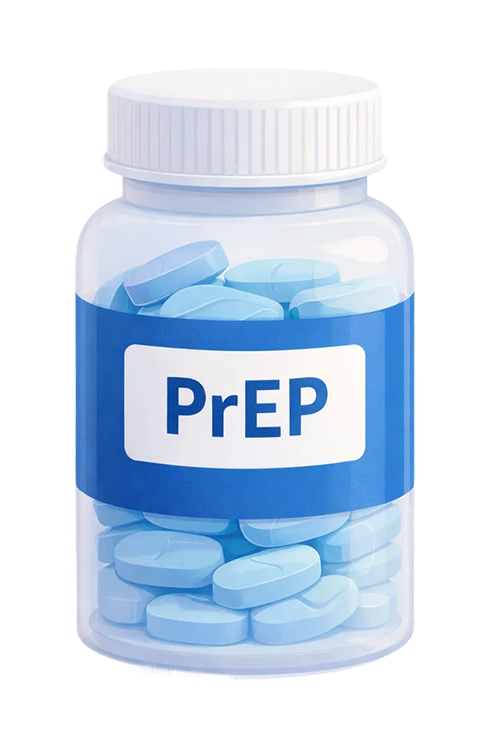
PREP (pre-exposure prophylaxis)

PREP is a HIV prevention option where HIV negative people take HIV medication at specific intervals to prevent infection.

Who is PREP for?

A man (cis or trans) or transgender woman who has anal sex with men and does not always use a condom.
If your sexual partners include men who have anal sex with men.
If you've had chemsex, or had sex when parting with any drugs and alcohol with former or current partners.
Have a heterosexual partner who has HIV, and you want to have a baby.
Have a partner who is HIV positive but has not achieved an undetectable viral load, and you don't always use a condom.
A person who injects drugs.

Three Types of PREP for Gay men

Daily PREP

1

Take 1 pill every day.

Works for you:

If you want to be protected from HIV without having to anticipate when your next sexual encounter may be.
If you have a generally busy sex life.
If you prefer the structure of routine dosing.

On-demand PREP

1

Currently only recommended for cis men who have sex with other men, as there is not enough research to support its efficacy in other groups.

Works for you:

If you infrequently have sex.
If you plan or delay sex (by at least 2 hours).

The timing of taking it is extremely important.

To take PREP on-demand, use the 2-1-1 dosing schedule:

Take 2 pills (double dose) between 2-24 hours before sex, then.
Take 1 pill 24 hours after the double dose, then.
Take 1 pill another 24 hours after that.
If you continue to have sex, then keep taking 1 pill daily until two days after your last hook-up.

Periodic PREP

1

Take one pill once a day over a period of time when you want to protect yourself from HIV.

2

Can be however long or short that works for you – usually when you think you might be having lots of sex.

3

Works for you If you don't want or need to take PrEP long-term.

4

How you take periodic PrEP will vary.

Undetectable/undetectable viral road/U=U

An HIV positive guy has taken treatment effectively and reduced the amount of HIV in his blood to a level undetectable by tests.
No risk of HIV transmission.

PEP (post-exposure prophylaxis)

If you think you have recently been exposed to HIV, you may need PEP (post-exposure prophylaxis). PEP is a 4-week treatment that can prevent HIV infection, but you need to act fast – within 72 hours.

Vaccinations

Men who have sex with men are at risk of acquiring certain vaccine-preventable diseases, and should receive vaccines against:

Hepatitis A (an acute liver infection).
Hepatitis B (an infection of the liver caused by the hepatitis B virus).
Mpox (a rare virus which, until recently, was mainly isolated to returned travellers).
HPV (human papillomavirus) (a very common STI which usually shows no symptoms and goes away by itself, however, in a small number of people, HPV can cause serious illness and is responsible for most genital warts and cervical cancers).

Get tested yourself and your partner regularly!

Frequently Asked Questions

More Resources / Relevant Articles

Genitalia

Understand Your Body

Menstruation

Understanding Periods & Menstrual Health

What Does This Mean?

STI

(Sexually Transmitted Infection)

Click to learn common health terms

What Does This Mean?

Consent

Click to learn common health terms

What Does This Mean?

PEP

(Post-Exposure Prophylaxis)

Click to learn common health terms

What Does This Mean?

PrEP

(Pre-Exposure Prophylaxis)

Click to learn common health terms